The Quantum Leap: How Quantum Computing Will Reshape Financial AI
The world of finance is undergoing a dramatic transformation, fueled by the relentless march of artificial intelligence (AI). From fraud detection to algorithmic trading, AI is reshaping how financial institutions operate. But on the horizon, a far more disruptive technology looms: quantum computing. Its potential impact on financial AI is profound, promising to unlock solutions currently beyond the reach of even the most powerful classical computers.
Beyond Classical Limits: The Power of Quantum Computing
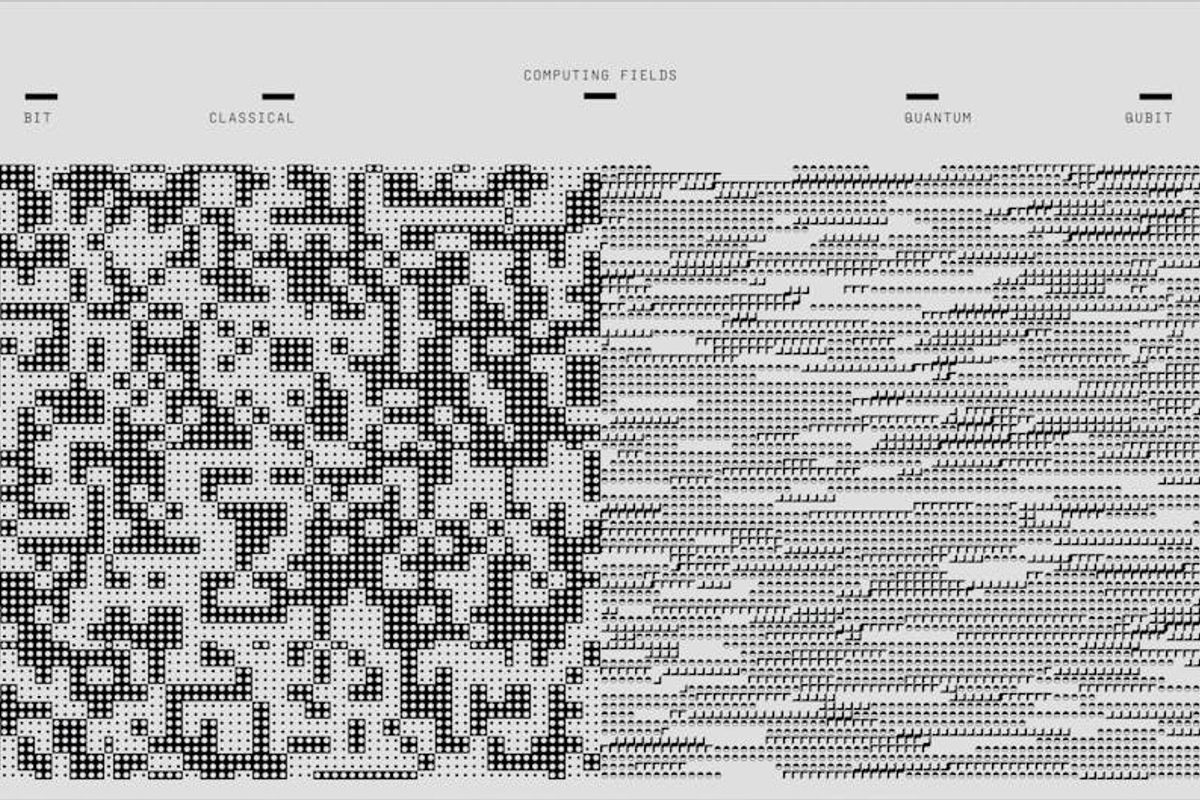
Classical computers store information as bits, representing either 0 or 1. Quantum computers, however, leverage the principles of quantum mechanics to utilize qubits. Qubits, through superposition and entanglement, can represent 0, 1, or a combination of both simultaneously. This allows quantum computers to process information exponentially faster than their classical counterparts for specific types of problems.
This exponential speedup is crucial for tackling complex financial challenges that are currently intractable. For instance, simulating complex market dynamics, optimizing investment portfolios across vast datasets, and developing sophisticated risk models are all computationally intensive tasks that could be revolutionized by quantum computing.
Transforming Financial AI: Key Applications
The integration of quantum computing with financial AI has the potential to transform several key areas:
1. Algorithmic Trading:
High-frequency trading (HFT) relies on speed and precision. Quantum computers could significantly enhance HFT algorithms, enabling faster execution speeds and more sophisticated strategies. Their ability to analyze vast amounts of market data in real-time could lead to more profitable trading opportunities and improved risk management. Furthermore, quantum machine learning algorithms can discover subtle patterns and correlations in market data that are invisible to classical algorithms, potentially leading to more accurate predictions and optimized trading strategies.
2. Fraud Detection:
Detecting fraudulent transactions is a critical function in the financial industry. Quantum AI could revolutionize fraud detection by analyzing massive datasets of transaction records far more efficiently than current systems. Quantum machine learning models can identify complex patterns indicative of fraud, improving the accuracy and speed of detection, ultimately minimizing financial losses.
3. Risk Management:
Assessing and mitigating financial risk is crucial for the stability of the entire system. Quantum computers can significantly improve risk models by handling the complexities of highly interconnected financial systems. They can simulate intricate scenarios involving multiple variables and dependencies, providing a more accurate and comprehensive risk assessment. This leads to more informed decision-making and improved risk mitigation strategies.
4. Portfolio Optimization:
Constructing optimal investment portfolios requires balancing risk and return across a large number of assets. Quantum algorithms can significantly enhance portfolio optimization techniques, achieving better returns while minimizing risk. By considering a far wider range of factors and scenarios, quantum algorithms can identify investment opportunities that are currently missed by classical methods.
5. Regulatory Compliance:
The financial industry is heavily regulated. Quantum AI can assist in ensuring regulatory compliance by automating the analysis of massive datasets to identify potential violations. Its ability to sift through vast amounts of data quickly and accurately can streamline compliance processes and reduce the risk of penalties.
Challenges and Considerations
Despite the immense potential, the integration of quantum computing into financial AI faces several challenges:
- Technological Maturity: Quantum computers are still in their early stages of development. Building fault-tolerant, scalable quantum computers remains a significant technological hurdle.
- Algorithm Development: Designing quantum algorithms that can effectively solve financial problems requires specialized expertise. The development of efficient quantum algorithms is an ongoing area of research.
- Data Availability and Preparation: Quantum algorithms require high-quality, properly prepared data. Gathering and preparing such data for quantum computation can be challenging and resource-intensive.
- Integration with Existing Systems: Integrating quantum computing into existing financial infrastructure will require significant investment and adaptation.
- Security Concerns: Quantum computers pose a threat to current encryption methods. Developing quantum-resistant cryptography is crucial to secure financial data in the quantum era.
The Future of Finance: A Quantum Revolution
The impact of quantum computing on financial AI is poised to be transformative. While challenges remain, the potential benefits are too significant to ignore. As quantum computers become more powerful and readily available, their integration into financial AI will likely lead to more efficient, accurate, and secure financial systems. This quantum revolution is not just a technological advancement; it’s a fundamental shift in the way we understand and manage finance, paving the way for a future where financial decisions are driven by unprecedented levels of intelligence and speed.
The journey is still underway, but the destination—a quantum-powered financial future—is one filled with immense promise and opportunity for those who can navigate the complexities of this groundbreaking technology.
Frequently Asked Questions
What is the primary advantage of using quantum computing in financial AI?
Quantum computers offer an exponential speedup in processing power for specific types of problems, allowing for the analysis of significantly larger and more complex datasets than classical computers. This leads to improved accuracy and efficiency in various financial applications.
How can quantum computing improve fraud detection in finance?
Quantum AI can analyze massive transaction datasets to identify complex patterns indicative of fraud that are undetectable by classical methods. This leads to faster and more accurate detection, minimizing financial losses.
What are some of the challenges in integrating quantum computing into financial AI?
Challenges include the current technological limitations of quantum computers, the need for specialized expertise in quantum algorithm development, the need for high-quality data, and the need to address security concerns related to quantum computing.
What is the potential impact of quantum computing on portfolio optimization?
Quantum algorithms can significantly improve portfolio optimization by considering a far wider range of factors and scenarios than classical methods, leading to better risk-adjusted returns.
What is the timeline for widespread adoption of quantum computing in finance?
The timeline is uncertain, depending on advancements in quantum computing technology and the development of relevant quantum algorithms. While widespread adoption is still years away, initial applications and research are already underway.