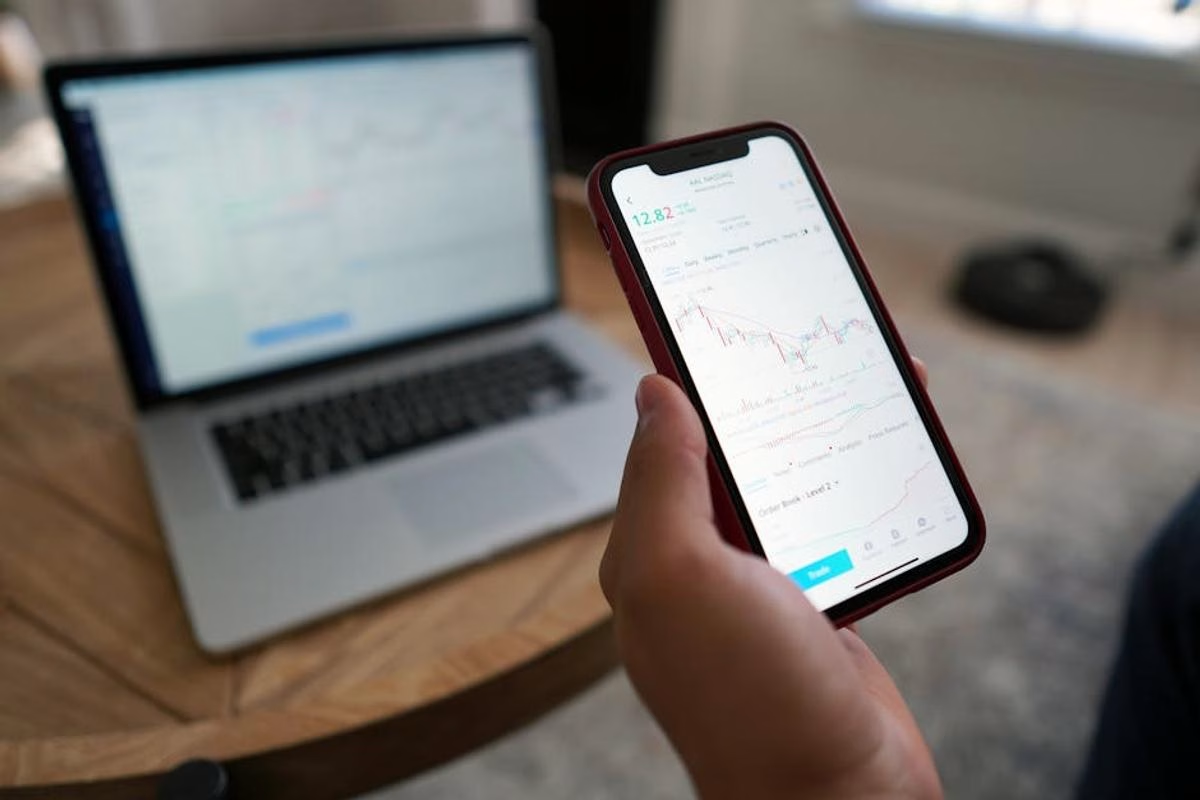
AI-Powered Investment Research Platforms for Traders: A Comprehensive Guide
In real use, people building AI-powered investment research platforms for traders often mention small trade‑offs that only show up once traffic hits.
AI-powered investment research platforms for traders are rapidly transforming the financial landscape. These platforms use artificial intelligence and machine learning to analyze vast datasets, identify trading opportunities, and provide actionable insights unavailable through traditional methods. This allows traders of all skill levels to improve their decision-making processes and potentially enhance their returns.. That’s the gist.
A tiny note that matters more than it sounds: instrumentation. With data, debates end faster.
Data Analysis and Pattern Recognition
In real use, people building AI-powered investment research platforms for traders often mention small trade‑offs that only show up once traffic hits.
AI algorithms excel at processing massive amounts of data far beyond human capabilities. These platforms ingest data from diverse sources, including financial news, social media sentiment, economic indicators, and historical price data. potentially predicting future price movements or identifying undervalued assets, Advanced algorithms then identify subtle patterns and correlations that might escape human observation. That’s the gist. For instance, a platform might analyze news articles to gauge market sentiment toward a specific stock, factoring this into its prediction model. This data-driven approach is a notable advantage for traders seeking an edge in the market..
You’ll see the same thing in public threads: an idea lands, rough edges appear, then a practical fix ships.
Algorithmic Trading Strategies
Most teams eventually learn the same rule — simpler beats clever at 3 a.m. when something breaks.
Many AI-powered platforms offer automated trading functionalities. removing emotional biases that can often hinder human decision-making, These systems execute trades based on pre-defined parameters and algorithms. Algorithmic trading strategies vary significantly. That’s the gist. automatically buying or selling assets based on these predictions, Some platforms employ sophisticated machine learning models to predict price movements. identifying arbitrage opportunities or implementing complex hedging strategies, Others focus on quantitative analysis. A micro-example would be a platform automatically selling a stock when it reaches a pre-set price target.. That’s the gist.
In real use, people building AI-powered investment research platforms for traders often mention small trade‑offs that only show up once traffic hits.
Risk Management and Portfolio Optimization
A tiny note that matters more than it sounds: instrumentation. With data, debates end faster.
Managing risk is key for any trader. AI-powered investment research platforms incorporate risk assessment models to help traders understand the potential downsides of their investment strategies. assessing the potential impact of different investments on a trader’s portfolio, These platforms can simulate various market scenarios. That’s the gist. For example, the platform might model the portfolio’s performance under various economic conditions, providing traders with a more complete picture of risk and reward. This proactive approach to risk management is a key feature of modern AI investment platforms..
Most teams eventually learn the same rule — simpler beats clever at 3 a.m. when something breaks.
Sentiment Analysis and News Aggregation
You’ll see the same thing in public threads: an idea lands, rough edges appear, then a practical fix ships.
Understanding market sentiment is a key aspect of successful trading. AI-powered investment research platforms use natural language processing (NLP) to analyze news articles, social media posts, and other textual data to gauge market sentiment toward specific assets. This enables traders to anticipate potential price movements based on collective market opinion. That’s the gist. For example, a sudden spike in negative social media sentiment about a company could signal an upcoming drop in its stock price, allowing traders to adjust their positions accordingly. such as sentiment scores or visual dashboards., This information is often presented in easily digestible formats.
A tiny note that matters more than it sounds: instrumentation. With data, debates end faster.
Backtesting and Simulation
In real use, people building AI-powered investment research platforms for traders often mention small trade‑offs that only show up once traffic hits.
Before implementing any trading strategy, thorough testing is essential. AI-powered platforms typically offer solid backtesting capabilities. Traders can simulate their chosen strategies using historical market data to assess their past performance. That’s the gist. This allows for a detailed evaluation of potential profits and losses before risking real capital. a trader might backtest an algorithmic trading strategy over the past five years to gauge its performance under various market conditions, For example. This capability dramatically reduces the risk associated with implementing new strategies.. That’s the gist.
You’ll see the same thing in public threads: an idea lands, rough edges appear, then a practical fix ships.
Accessibility and User Experience
Most teams eventually learn the same rule — simpler beats clever at 3 a.m. when something breaks.
user experience is also key, While sophisticated AI is at the heart of these platforms. Many leading platforms provide intuitive interfaces that are accessible even to less experienced traders. These platforms often offer educational resources, tutorials, and personalized support to help users navigate the platform’s capabilities. That’s the gist. catering to both novice and expert traders, Some platforms even offer different levels of complexity. This accessibility makes the benefits of AI-powered investment research accessible to a broader user base..
In real use, people building AI-powered investment research platforms for traders often mention small trade‑offs that only show up once traffic hits.
AI-Powered Investment Research Platforms for Traders: The Future of Investing
A tiny note that matters more than it sounds: instrumentation. With data, debates end faster.
The development of AI-powered investment research platforms is rapidly changing the way traders approach markets. instead becoming an increasingly essential resource for both individual investors and institutional firms, These platforms are no longer a niche tool. The capacity to process and analyze massive datasets, identify subtle market patterns, and automate trading strategies offers traders a notable competitive advantage. That’s the gist. As AI technology continues to evolve, these platforms are expected to become even more sophisticated, providing even more powerful tools for traders seeking higher returns. The integration of AI and trading is shaping a new era of financial markets characterized by increased efficiency and data-driven decision-making. Understanding and leveraging the potential of AI-powered investment research platforms for traders is a key step in navigating this evolving landscape.. That’s the gist.
Most teams eventually learn the same rule — simpler beats clever at 3 a.m. when something breaks.
The continuing development of AI-powered investment research platforms for traders underscores a notable shift towards data-driven decision-making in financial markets. Their capacity for rapid data analysis, pattern recognition, and automated trading strategies represents a considerable advantage. but, users must understand the limitations of AI. That’s the gist. and prudent risk management remains vital, No system can perfectly predict the future. AI-powered platforms undeniably represent a step forward in the evolution of trading technologies., Despite these limitations.
You’ll see the same thing in public threads: an idea lands, rough edges appear, then a practical fix ships.
AI-powered investment research platforms for traders offer a powerful toolkit for navigating the complexities of the financial markets. these platforms empower traders to make better informed decisions and potentially improve their trading performance, By leveraging the power of AI and machine learning. but, users should always exercise caution, diversifying their investments and employing effective risk management strategies.. That’s the gist.
Most teams eventually learn the same rule — simpler beats clever at 3 a.m. when something breaks.
The evolution of these platforms shows no sign of slowing. Expect to see further advancements in areas such as natural language processing, sentiment analysis, and algorithmic trading strategies. offering both opportunities and challenges for investors, The ongoing integration of cutting-edge AI technology will continue to shape the future of trading. That’s the gist. The effective utilization of AI-powered investment research platforms for traders represents a key adaptation to the increasingly data-rich world of finance..
You’ll see the same thing in public threads: an idea lands, rough edges appear, then a practical fix ships.
Field Notes
- Benchmarks rarely tell the whole story; real traffic patterns do.
- Trade‑offs shift over time — today’s bottleneck might vanish after one refactor.
- Docs that include failure modes save more time than perfect diagrams.
- Small utilities around AI-powered investment research platforms for traders often shape workflows more than flagship features.

FAQ
Q: What types of data do AI-powered investment research platforms analyze?
A: These platforms analyze various data, including historical price data, financial news, social media sentiment, and economic indicators. This comprehensive data set allows for a more holistic market analysis.
Q: How do these platforms help with risk management?
A: AI platforms simulate different market scenarios, allowing traders to assess the potential impact of their investment strategies on their portfolio, helping them mitigate risks.
Q: Can I use these platforms if I’m not an experienced trader?
A: Many platforms offer user-friendly interfaces and educational resources, making them accessible to both novice and expert traders. However, always learn the platform’s functionalities before using it.
Q: What are the limitations of AI-powered investment research platforms?
A: While powerful, AI platforms cannot perfectly predict future market movements. They are tools to assist, not replace, human judgment and risk management. Unexpected events can still affect investments.
Q: Are these platforms suitable for algorithmic trading?
A: Yes, many AI-powered platforms support automated trading functionalities, allowing traders to execute trades based on predefined parameters and algorithms.
Q: How do these platforms perform sentiment analysis?
A: Using NLP, they analyze textual data from various sources to gauge market sentiment toward specific assets, which aids in anticipating potential price movements.