
Geopolitical Tensions: The Unseen Hand Shaping Global Oil Prices
The price of oil, a lifeblood of the global economy, dances to a complex rhythm. While supply and demand play significant roles, a far more volatile conductor is geopolitical tension. From simmering conflicts to outright wars, political instability in key oil-producing regions sends ripples—often shockwaves—through the global market, impacting everything from gasoline prices at the pump to the cost of manufacturing goods.
This intricate relationship between geopolitical instability and oil prices isn’t simply correlation; it’s a direct causal link. Understanding this connection requires delving into the political landscapes of major oil-producing nations and the ripple effects their actions have on the global energy market.
The Middle East: A Perennial Hotspot
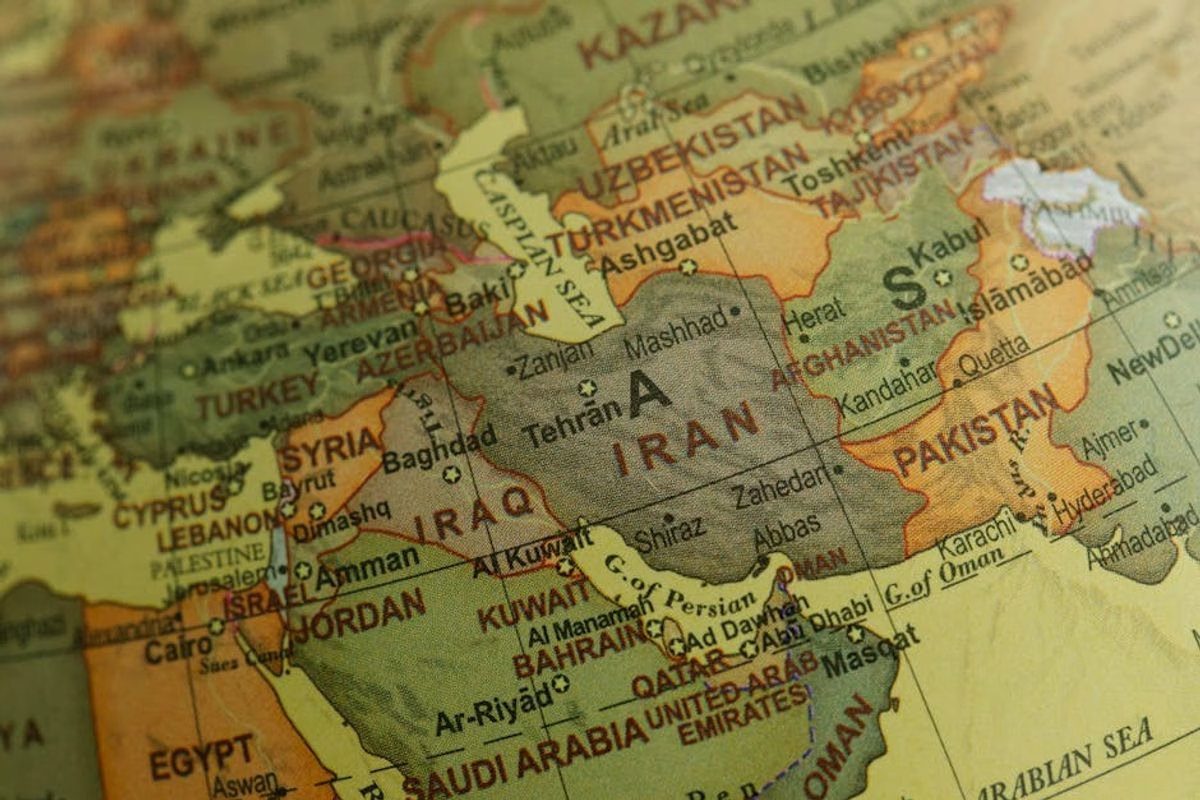
The Middle East, home to OPEC (Organization of the Petroleum Exporting Countries), remains the epicenter of global oil production. Any escalation of conflict, be it a proxy war, a border skirmish, or a full-blown invasion, immediately impacts oil supply and, consequently, prices. The region’s political instability is often characterized by fragile alliances, shifting power dynamics, and competing ideologies, creating a volatile environment ripe for price fluctuations. The 1990 Iraqi invasion of Kuwait, for example, triggered a massive spike in oil prices, showcasing the immediate and dramatic impact of geopolitical events.
Recent events in the region, particularly the ongoing conflicts and tensions in Yemen, Syria, and Libya, serve as ongoing reminders of this inherent risk. These conflicts often disrupt oil production directly through damage to infrastructure, or indirectly through limitations on transportation and logistics. The uncertainty generated by these conflicts also leads to speculative trading, driving prices higher as investors seek to hedge against potential supply disruptions.
Beyond the Middle East: Global Impacts
Geopolitical risks are not limited to the Middle East. Political instability in other oil-producing regions, such as Venezuela, Nigeria, and Russia, can also significantly impact global prices. Sanctions imposed on certain countries, such as the ongoing sanctions against Russia, disrupt oil exports, creating artificial scarcity and pushing prices up. These sanctions are often a political tool wielded to exert pressure on regimes with unsavory practices, but they invariably impact global markets. The resulting price hikes disproportionately affect developing nations, which are often heavily reliant on oil imports.
Furthermore, the global interconnectedness of energy markets means that even seemingly minor political events in seemingly unrelated regions can trigger price increases. For instance, a sudden escalation in tensions between major trading partners can create uncertainty about future oil shipments, leading to precautionary price increases by oil traders. This underscores the pervasive influence of global politics on oil markets and its far-reaching consequences.
The Role of Speculation and Market Sentiment
Geopolitical uncertainty fuels speculation in oil markets. Traders and investors anticipate potential supply disruptions, often leading to a self-fulfilling prophecy. When news breaks of a major geopolitical event, even if the impact on oil production is minimal initially, the market’s response can be dramatic. Investors rush to secure supplies, driving up prices even before any tangible impact on oil production is realized. This psychological aspect significantly contributes to oil price volatility and underscores the interconnectedness of global finance and geopolitics.
The Energy Transition and Geopolitical Risk
The global shift toward renewable energy sources presents a complex interplay with geopolitical tensions and oil prices. While the transition to renewables has the potential to reduce the global reliance on oil and diminish the impact of geopolitical events, the path towards this transition is neither linear nor without its own set of geopolitical implications. Competition for resources needed for renewable energy technologies, such as rare earth minerals, introduces new potential sources of geopolitical tensions, highlighting the enduring nature of geopolitical risk in the energy sector.
Mitigating the Impact: Diplomacy and Energy Security
Navigating the complex interplay between geopolitics and oil prices requires a multi-pronged approach. Diplomatic efforts to de-escalate tensions in key oil-producing regions are crucial for maintaining stable supply chains. Investing in diversified energy sources and strengthening international energy security frameworks can reduce the vulnerability of nations to oil price shocks caused by geopolitical events. This approach, in essence, seeks to decouple the global energy supply from the fragility of specific geopolitical situations.
Ultimately, the link between geopolitical tensions and global oil prices is undeniable and will likely remain a defining feature of the global energy market for the foreseeable future. Understanding this complex relationship is not merely an academic exercise; it is essential for policymakers, businesses, and individuals alike to navigate the uncertainties of the global energy landscape and make informed decisions in a world increasingly shaped by volatile geopolitical forces.
Conclusion
The price of oil is more than just an economic indicator; it’s a reflection of the world’s geopolitical landscape. From the Middle East to regions across the globe, political instability and conflict consistently disrupt oil supplies and trigger price spikes, impacting economies worldwide. The interplay between geopolitics and energy security is a continuous, dynamic process that requires a comprehensive understanding to effectively manage its complex consequences.
Frequently Asked Questions
What are the primary geopolitical factors influencing global oil prices?
The primary factors include conflicts and instability in major oil-producing regions (especially the Middle East), sanctions imposed on oil-producing nations, and broader geopolitical tensions that create uncertainty in global energy markets. These factors can directly impact oil supply and/or lead to speculative trading, thus affecting prices.
How do sanctions affect global oil prices?
Sanctions imposed on oil-producing countries create artificial scarcity by limiting their ability to export oil. This reduced supply, even if the overall global production remains relatively unchanged, drives up prices as demand exceeds the available supply from sanctioned countries.
What role does speculation play in oil price volatility related to geopolitical events?
Speculation plays a significant role. Traders and investors anticipate potential supply disruptions due to geopolitical events, even before those disruptions materialize. This anticipation leads to increased buying, driving prices up – a self-fulfilling prophecy in many cases.
How does the transition to renewable energy affect the relationship between geopolitics and oil prices?
The transition towards renewable energy sources has the potential to lessen the impact of geopolitical events on oil prices by reducing global reliance on oil. However, the transition itself may create new geopolitical challenges related to securing resources necessary for renewable energy technologies.


